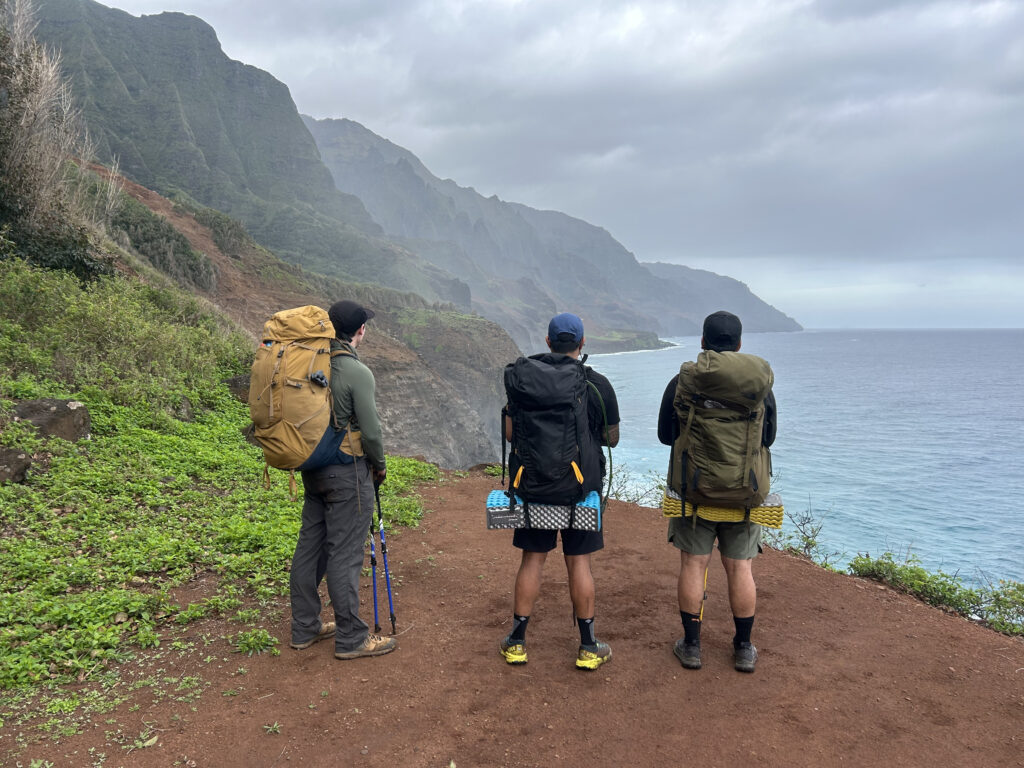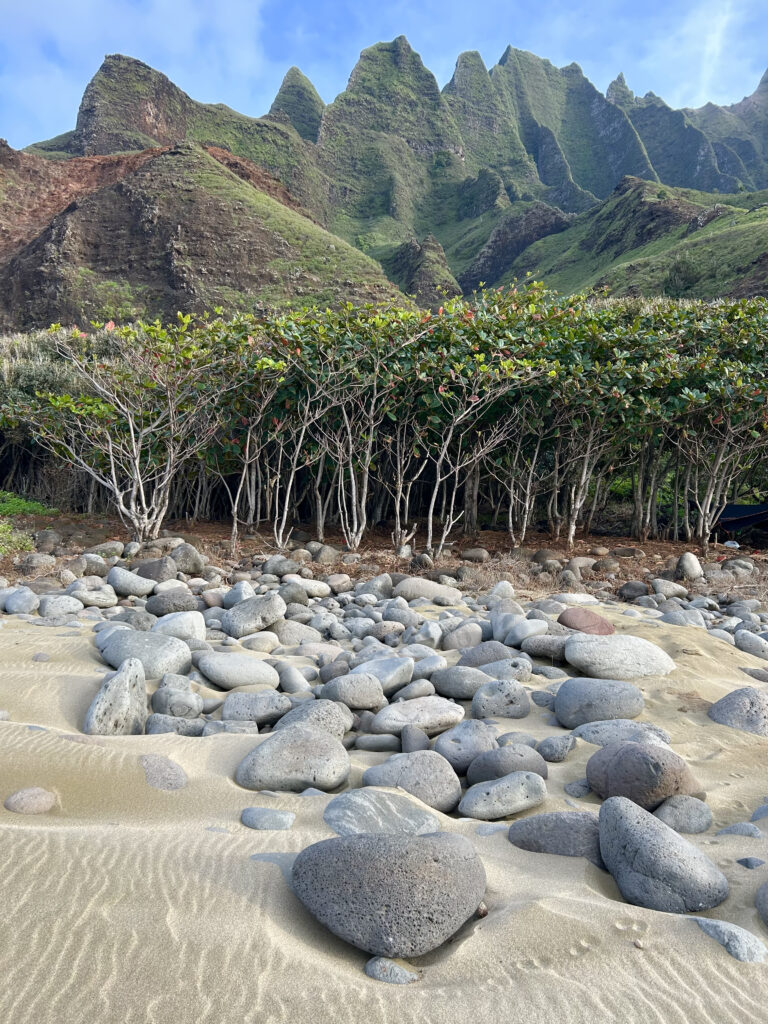
For years, I had dreamt of hiking the 22 mile Kalalau Trail, a wonderfully rugged coastal path that takes you to sparkling beaches, knife edge peaks, and seductive coves that aren’t accessible by road. It’s true, thousands of people tour the Na Pali coastline by helicopter and boat every year and the incessant whine of helicopter blades and boat motors is never far away, marring the wilderness experience and adding to that gut feeling that Hawaii is over commercialized, over-instagrammed, and overrun with transplants that detract from the ecological paradise it once was.
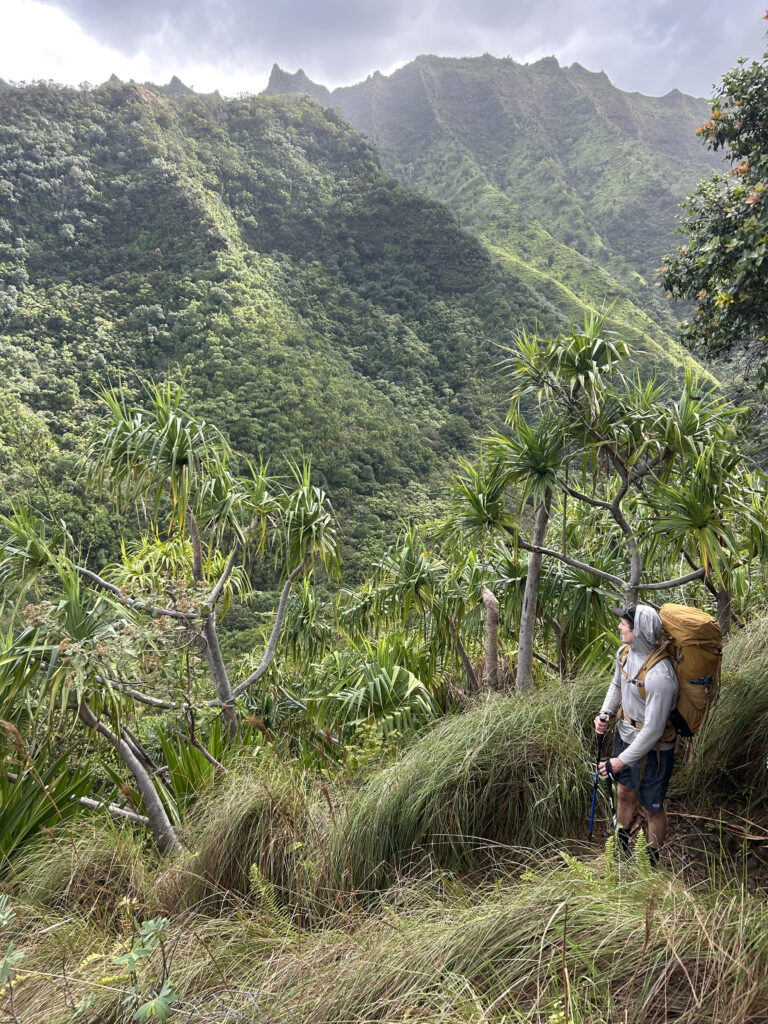
But few of those people actually set foot on the Na Pali coast. Few of them have the raw experience of scrambling over moss choked boulders, climbing through the humid, airless jungle to the top of a headland only to immediately descend again, slipping and sliding down a track no wider than a foot, dodging vines and swatting mosquitoes along the way while dripping in sweat that pools under the eyebrows.
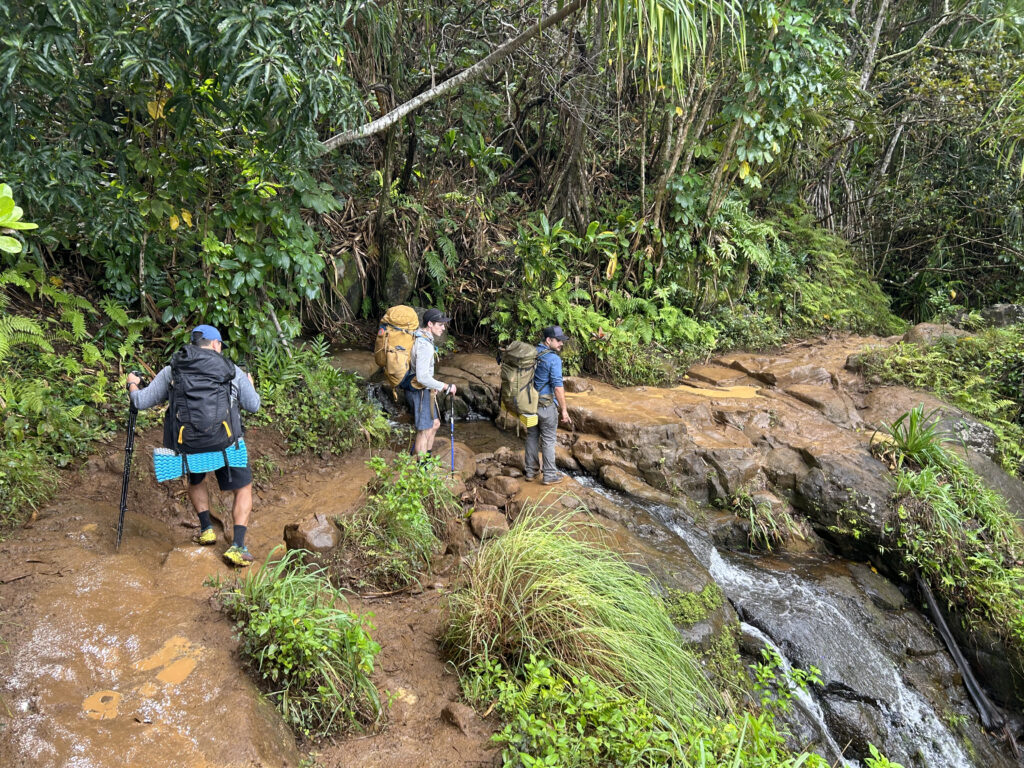
And the mud, always that ever present mud. Mud that prevents any sort of traction, gunks up your boot treads, clogs up your gear. If it wasn’t red before, it was red after — the stuff got everywhere, grinding into your clothes, giving that iron oxide sheen to anything it touched.
For this trek I was guiding a group I had taken to the Sierras a couple years prior — an expedition up Split Mountain that was incredibly enjoyable but ultimately proved much too difficult for my first time clientele. Ascending 8,000 feet over class 2/3 rock in the span of 6 miles was way out of their comfort zone, and after hiking up to base camp and spending an evening ravaging each other in a game of UNO we stumbled back to the car the next morning, the group collapsing into the truck and vowing to never have me lead them anywhere again. But when I mentioned Hawaii to one of the guys the idea proved to be too enticing, too exotic — and the group warmed up to the thought of me leading them into the back of beyond once again.
As we drove our “Rent a Wreck” rental car to the trailhead over increasingly narrower and pot holes roads in a steady drizzle it felt like a miracle we had even made it here. The trail had been closed the week before we arrived for flash flood danger and it looked to be getting more hard rain after we left. We checked in with the ranger at the Hā’ena State Park entrance, who confirmed that our plan to hike this during the wet season was not entirely crazy, but to just be careful crossing the streams and to never enter the ocean. He didn’t have to tell us that twice — the sea behind the ranger was roiling with ten foot waves and white water crashing into volcanic rock.
We were already in rain gear when we set out from the car. Lots of hikers do the first 2 mile section to Hanakāpī‘ai Beach, so we passed several groups in daypacks who remarked how impressive it was that we were going all the way out to Kalalau Beach. We sheepishly agreed, being at mile 0.5 out of 22. After lulling us in for the first 500 feet and taking us over boardwalks through an old farm of taro, the trail started to climb over the first headland. As anyone who has ever “hiked” across a rugged beach knows, beach hiking is almost never flat. The overall elevation change from start to finish is 0 (beach to beach), but we would go over countless promontories to get there, a change of 6,000 vertical feet overall (almost the same vertical change as climbing Mount Whitney).
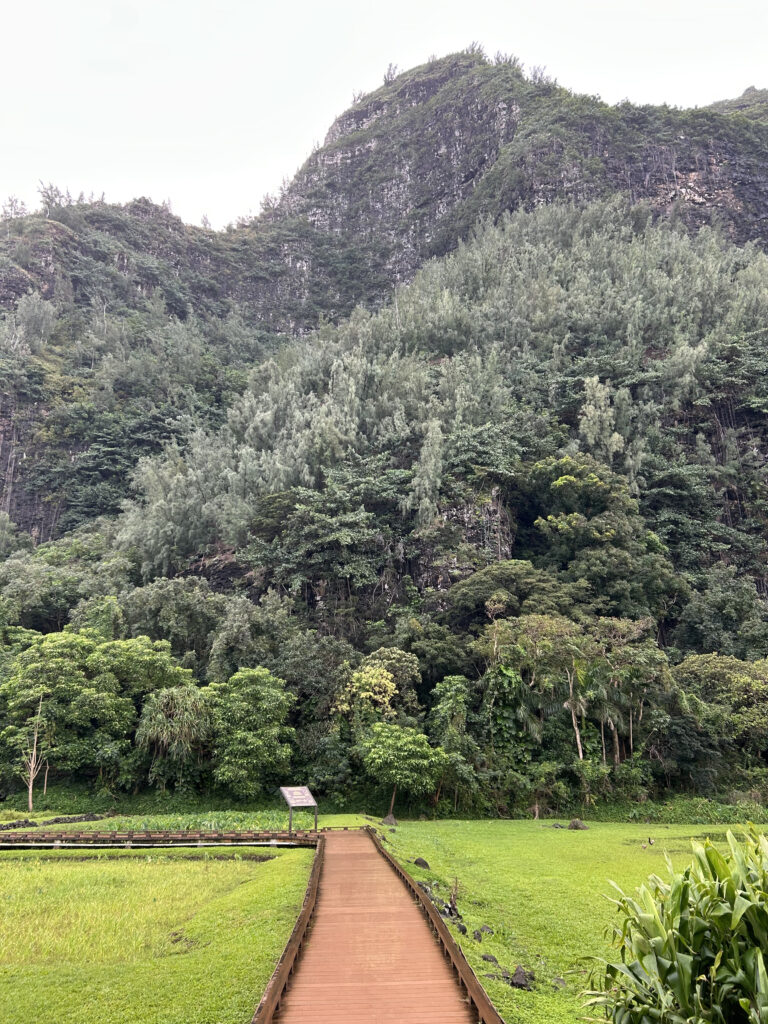
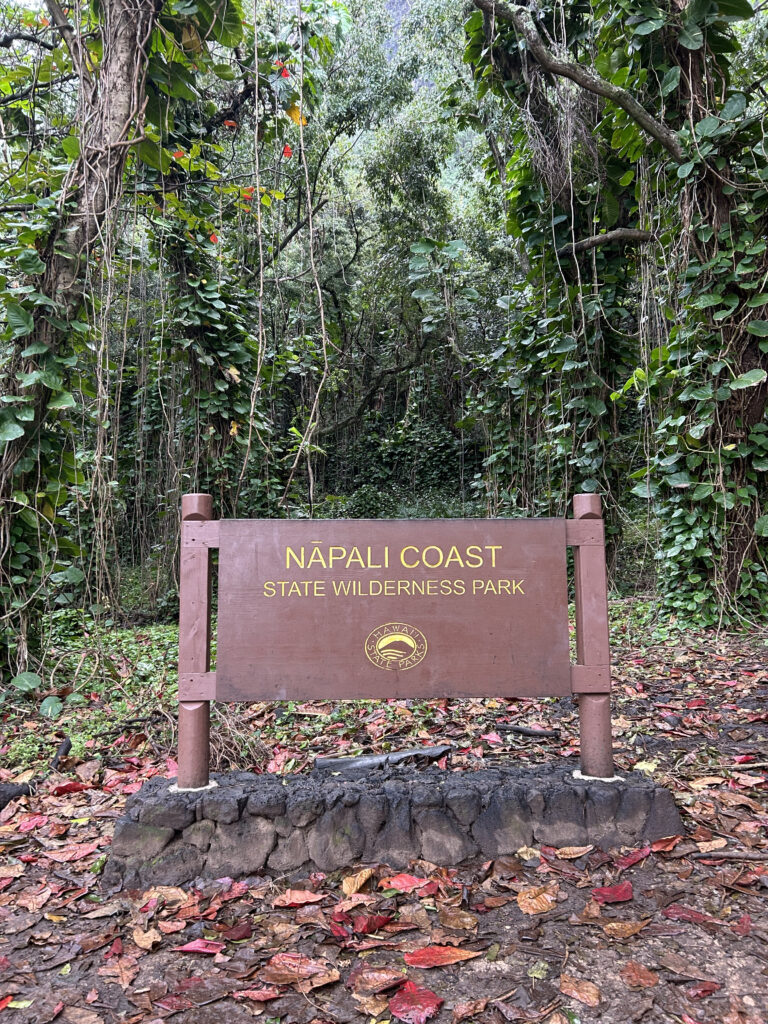
The trail didn’t waste time testing us on the first climb. Kauai is the wettest of the major Hawaiian islands. The north of the island is particularly wet. Every stair and boulder was coated in a moist slime of moss, algae, or mud, which proved even more difficult to navigate while carrying a 30 pound pack. By the time we got to the top of the headland it was still drizzling but I had taken off my rain gear — every part of my skin felt like it couldn’t breathe and with the sweat, humidity, and heat it seemed more pleasant to just be rained on.
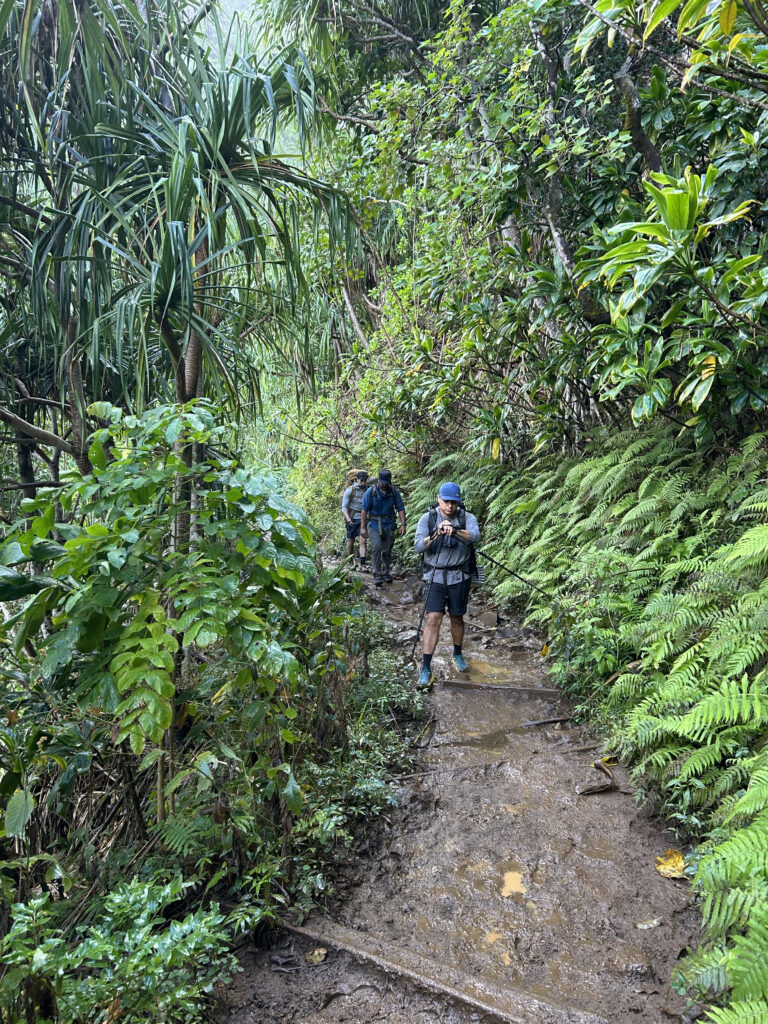
The descent proved equally maddening. You cannot cruise down a jungle trail. Every step can’t be trusted, something that may seem stable may just turn into a slick of mud. We made bets on who would be the first to fall on their ass (it wasn’t me). We went down a series of switchbacks deeper into the jungle and eventually began hearing the waves crashing again, signaling the beach was close. Then we hit sand and gravel. We had made it to the beach and the major stream crossing.
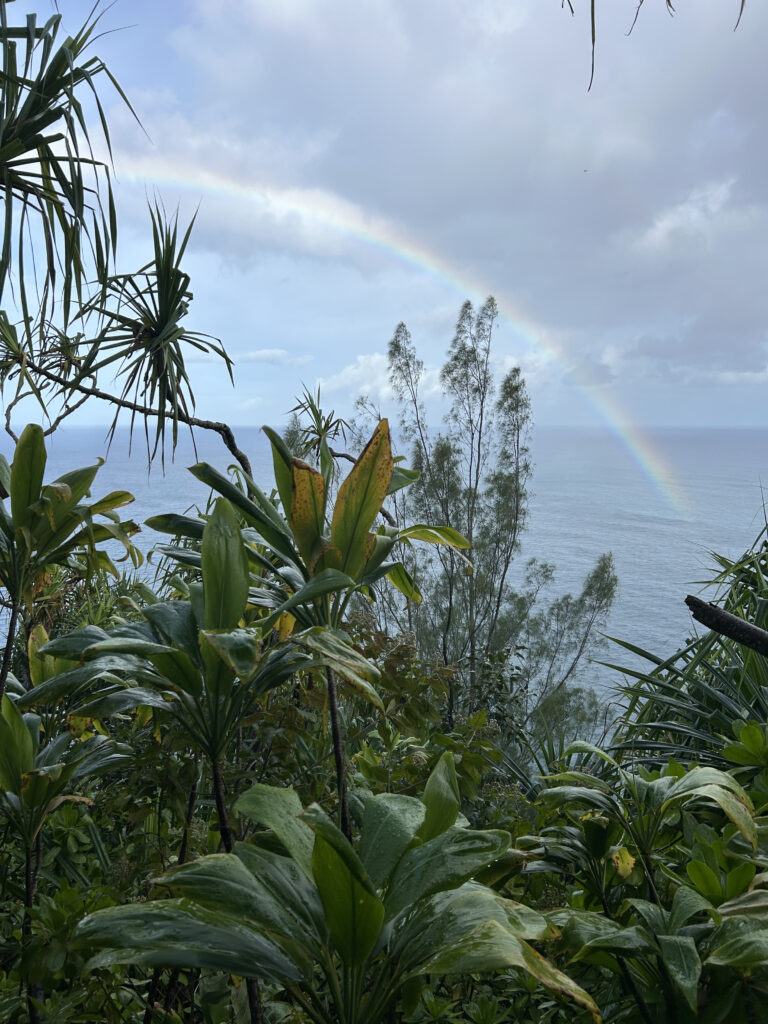
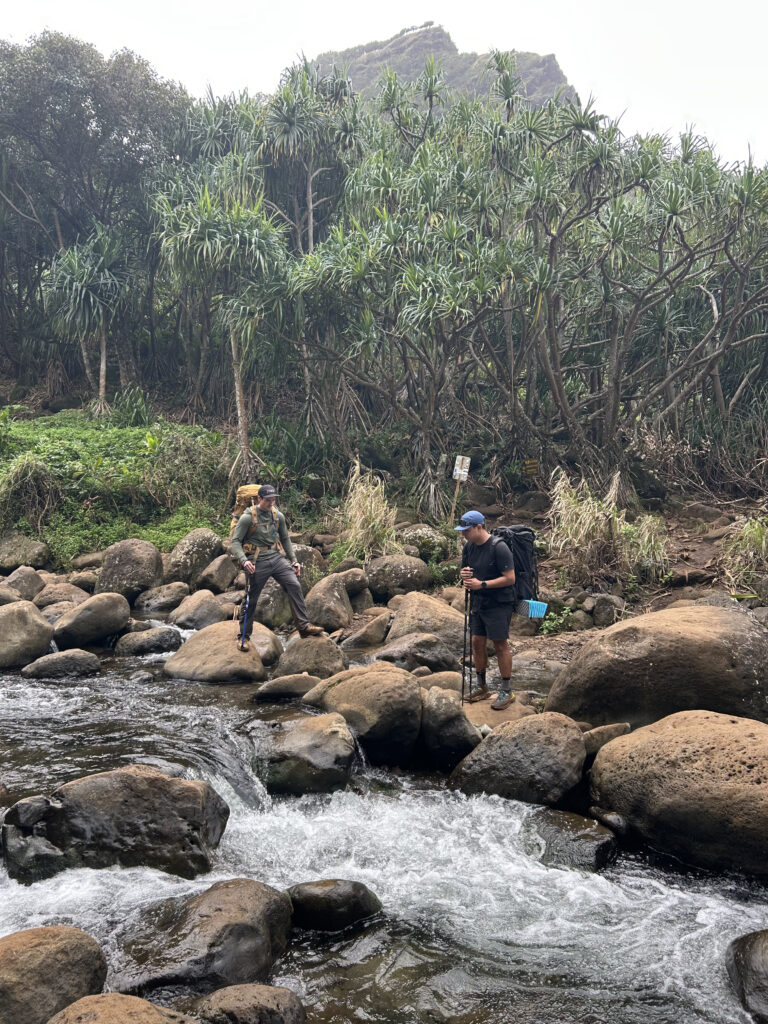
Although it had rained for several days before our trip, the water levels were manageable. Hanakāpī‘ai Beach is in a flash flood zone — when it rains the stream becomes a roaring brown river, and water levels can recede as quickly as they rise. I chose to cross at the normal upstream location; the rest of the group went down the beach in the hopes of crossing where the stream peters out into the beach. I think I had the easier time. I had just a few precarious rock jumps, but the boys had to climb over a series of boulders while avoiding the waves crashing from the sea. On the way back we all took the upstream route.
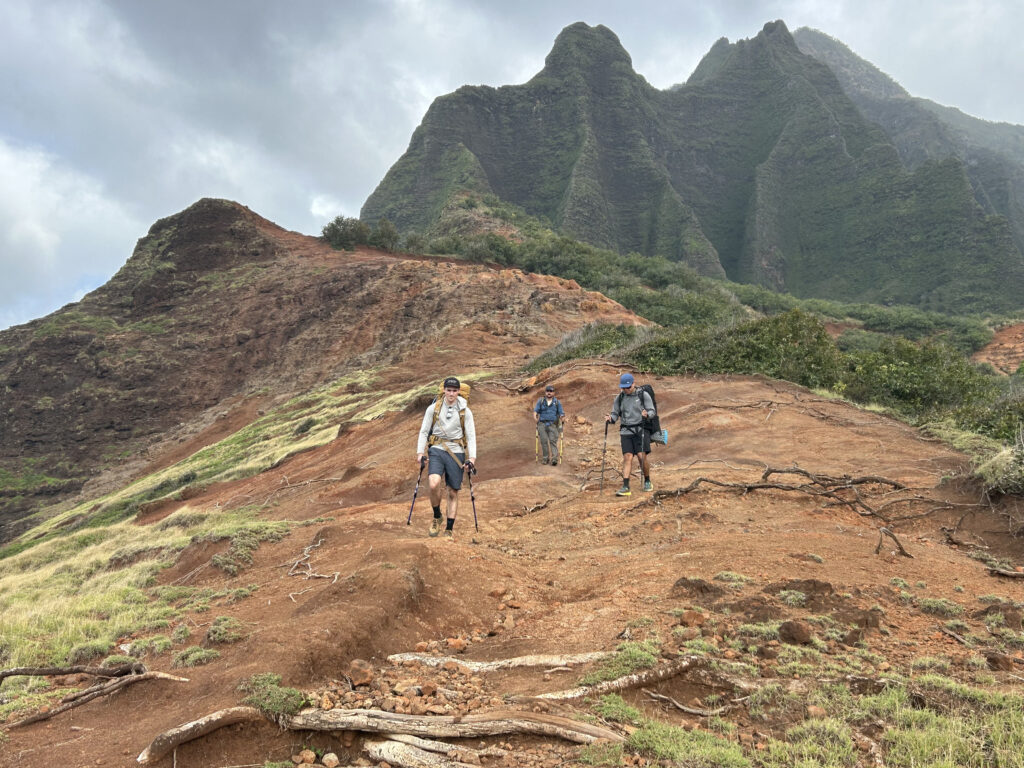
At this point we left the crowds and continued on the permit only section to Kalalau. From the beach to Crawlers Ledge (mile 8 or so), the route was somewhat of a blur. Climb a headland, get a view of the waves crashing into the rugged coast, descend back down. I lost track of the number of zigs and zags into the coves and around the outcrops. What I did notice was that the route progressively got drier. The thick jungle and slippery rock transformed into sweeping grassland with a pea gravel trail. And this is when we reached Crawler’s Ledge.
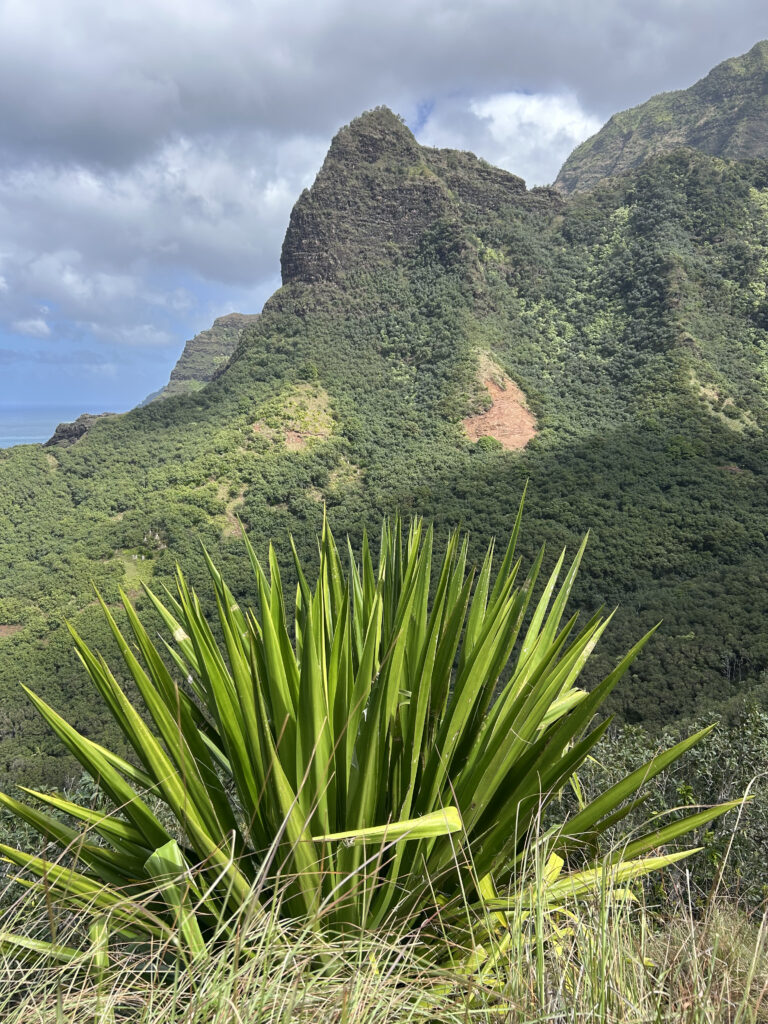
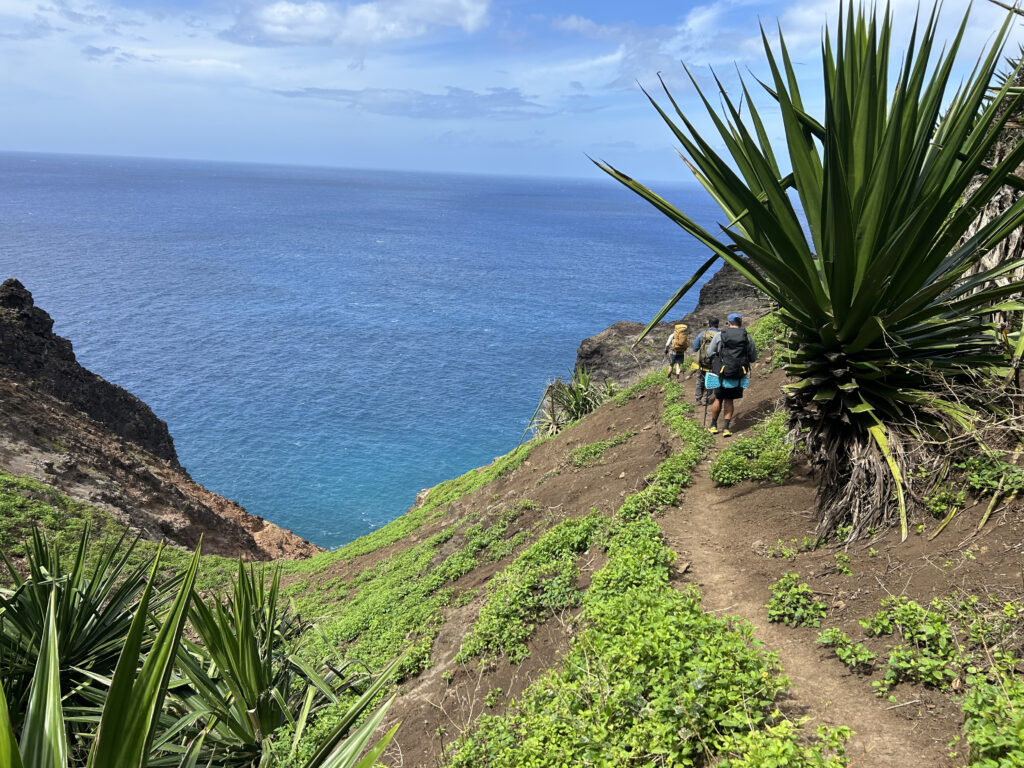
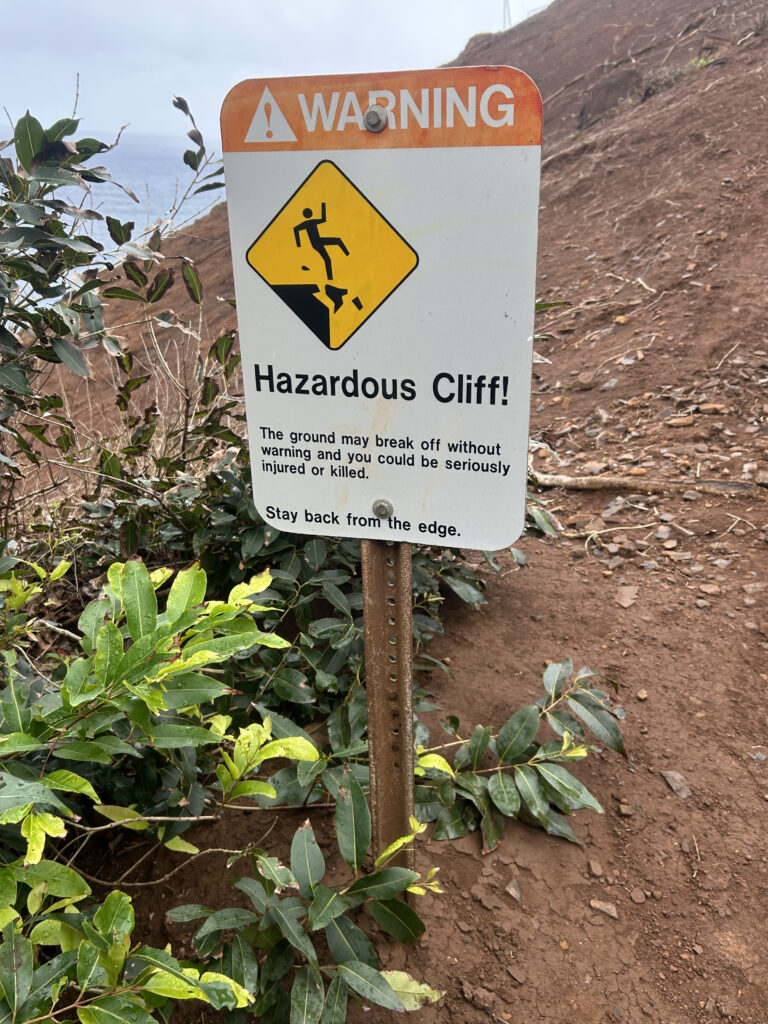
Crawler’s Ledge is famous for its hair raising, adrenaline pumping traverse of one of the final cliff bands on the way to the beach. The trail is carved right into the edge of the sea cliff; at some points it’s only 18 inches across, giving you a terrifying view of the 300 foot drop into the ocean below, the waves pounding the boulders in a giant cauldron of sea foam. The trail isn’t technical in any way, but the surface is composed of small bits of gravel that doesn’t give you confidence that your foot isn’t going to slip out from under you with a poor foot placement. At other points the cracks in the tread remind you that erosion is a constant force, and that at any point a section of the trail can slough off into the sea. So many accidents and rescues have happened here that Hawaii State Parks had to add warning signs to avoid further lawsuits. I will not be surprised if a major weather event in the near future closes the trail indefinitely from a whole section of the trail collapsing.
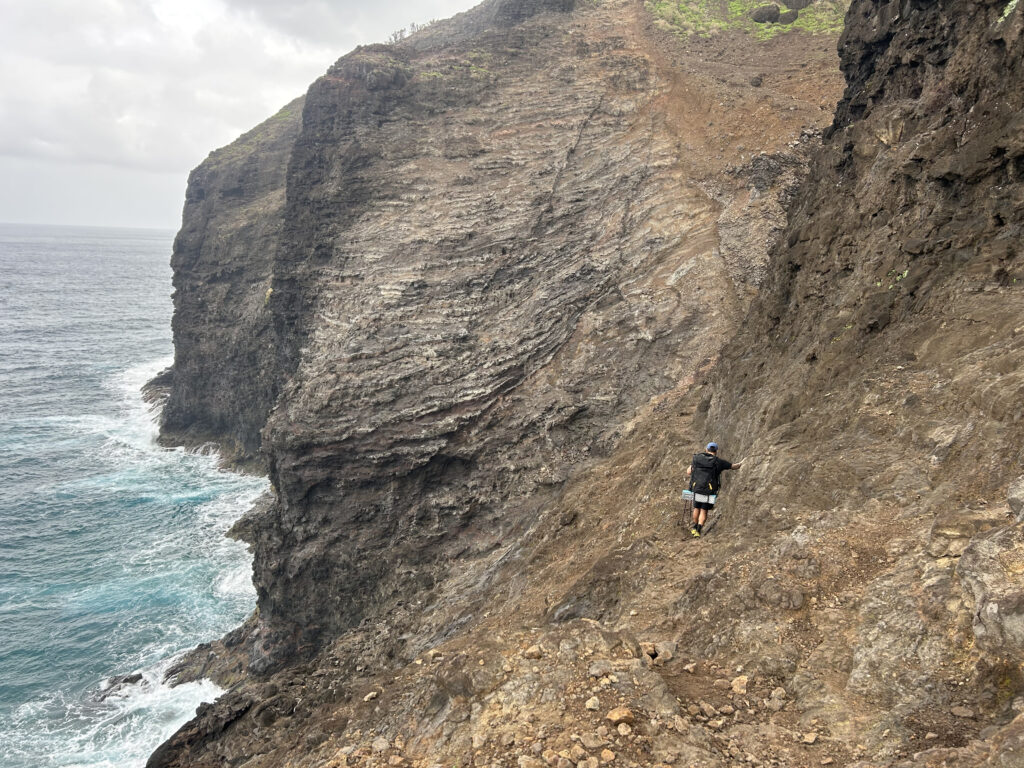
We picked our way around this section. Luckily, no one was coming the other way. This actually happened on the way back though, in which the other group had to find a nook to press their bodies into as we skirted around them. Yet another reason they limit this hike to 60 permits per day. Although the official Crawler’s Ledge is only a few hundred feet, the exposed gravelly hillsides afterwards lasted for another half mile or so. We were all mentally drained when we had finally made it through the section and re-entered the jungle.
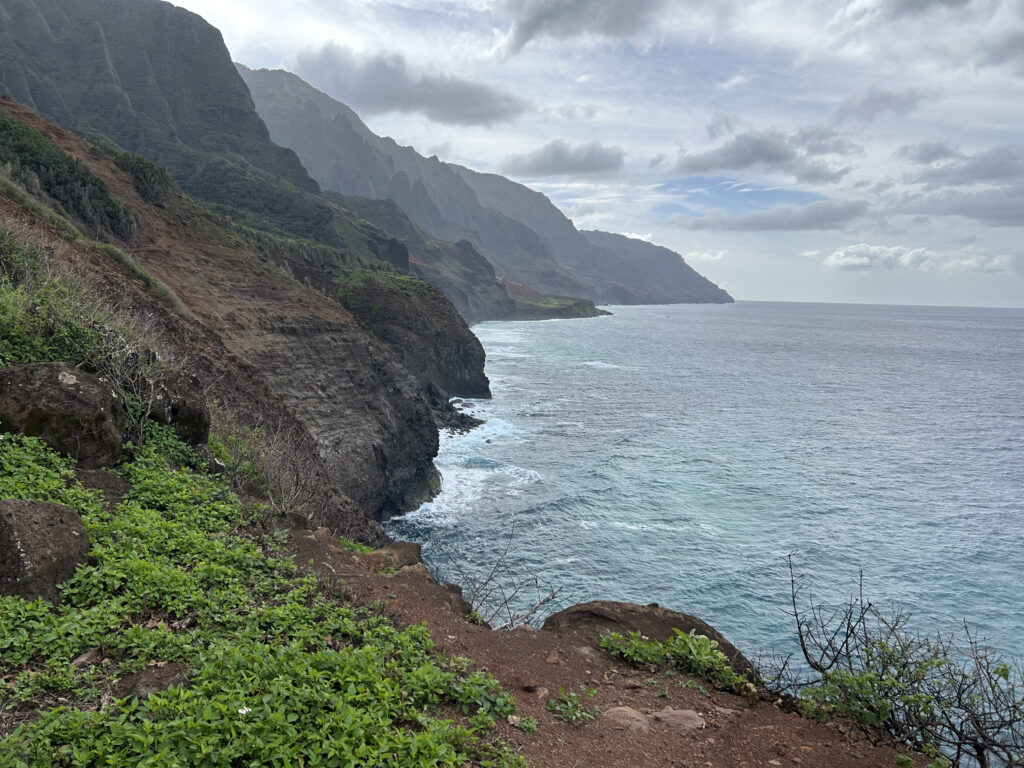
The last couple miles were uneventful. The summit of the final headland gave us a panoramic view of the sparkling ocean in the evening light and a view down to the sands of Kalalau beach. On the descent we passed several wild goat herds and finally made it into camp, about 9 hours after we started.
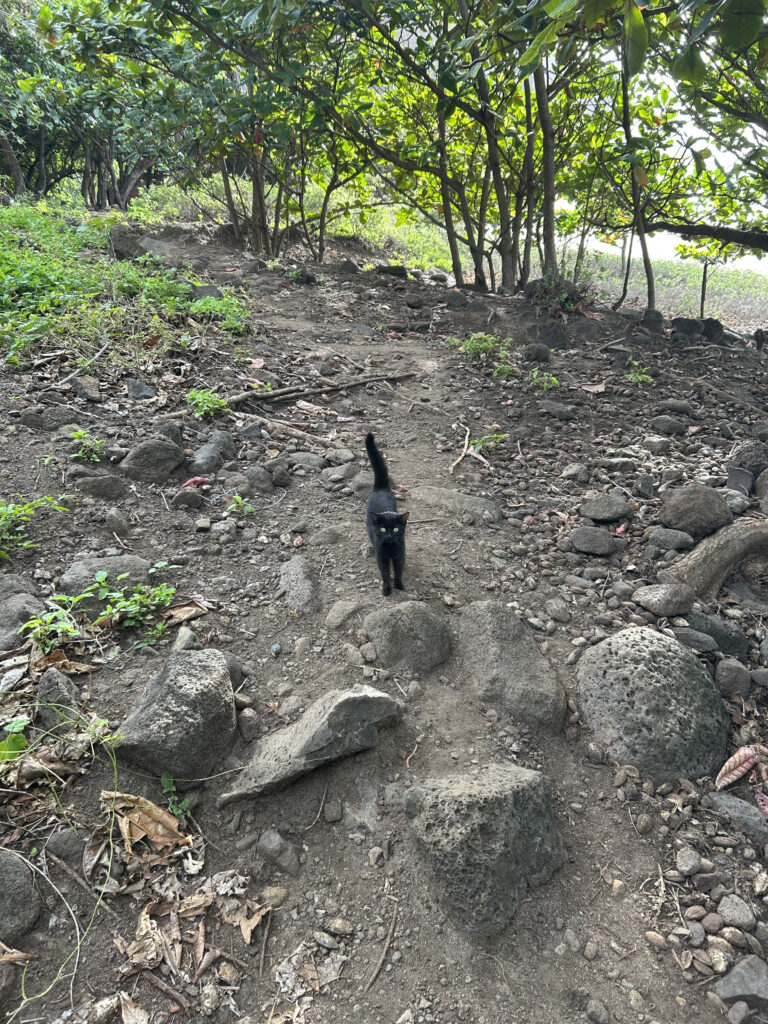
Kalalau is one of the most beautiful beaches in the world. The sparkling sand, the crashing waves, the emerald green mountains rising straight above you. What beats hiking 11 miles out to a remote beach, pitching a tent next to the sand, watching whales and dolphins on the horizon, a waterfall just steps away? It was a glorious evening. We made our camp dinner, became acquainted with the family of stray black cats that live on site, refilled our water bottles at the waterfall, watched the sunset, and the sky even cleared to do some stargazing. I could have easily stayed the five day permit maximum here. It was paradise. It was simple. The world was driving itself deeper into chaos thousands of miles and an ocean away, but here on this beach, time stood still.
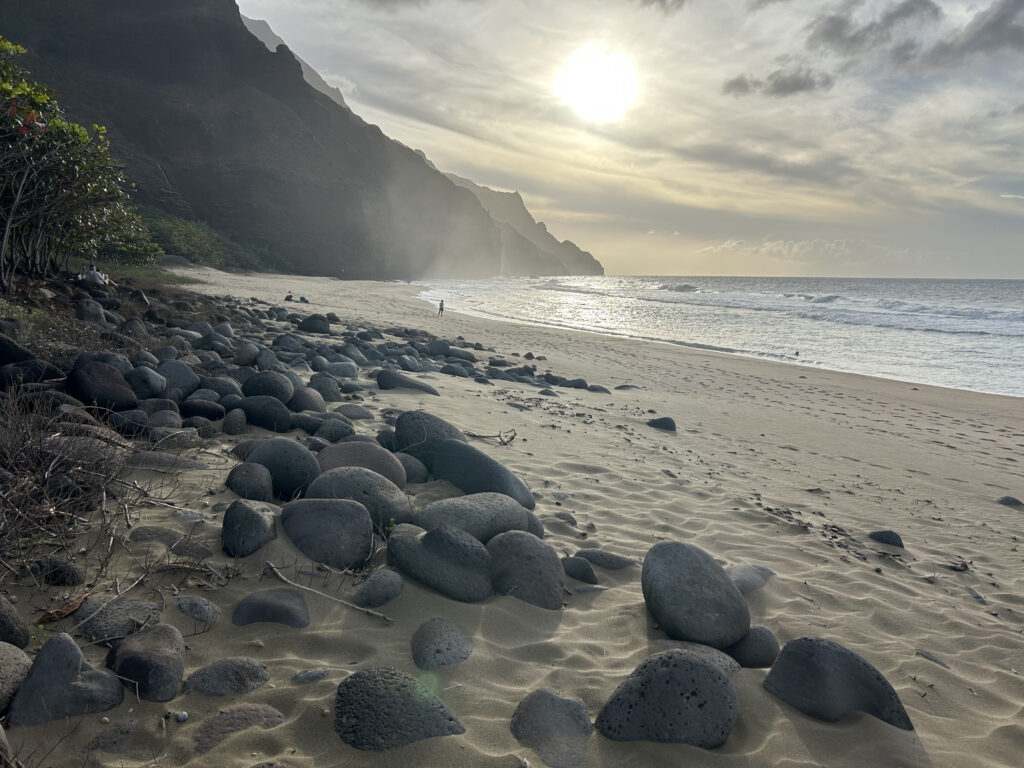
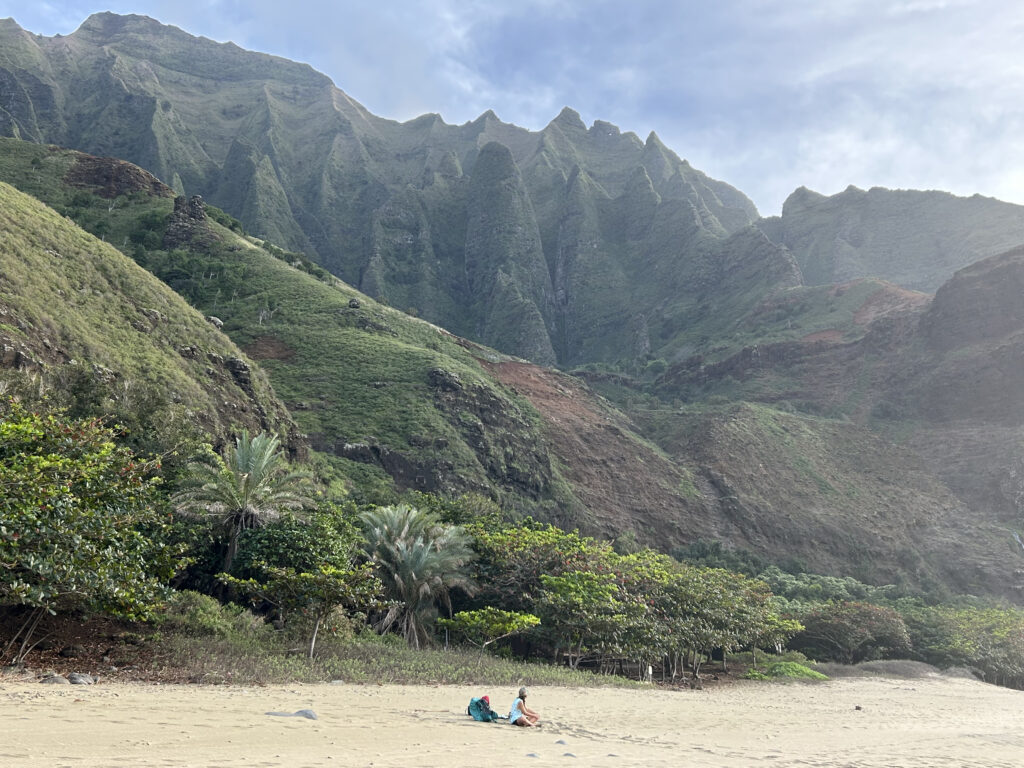
I love a good jungle night. It never gets cold. The insects ramp up their symphony and you are lulled to sleep with their white noise. A light tropical rain pitter pattering the fly of the tent.
Some of the best experiences of our lives are brief. Sometimes I return to a trail years later, thinking that if I had only spent more time lingering at a campsite or gazing at a waterfall I would’ve reached a state of enlightenment that hadn’t occurred during the first brief encounter. But it almost never works out that way. Inevitably something is always off — the lighting isn’t how I remembered, the waterfall is more crowded, I’ve changed and am now less impressionable. So I accepted the one magical evening the universe granted us here, and the next morning we packed up our gear and left. Since we figured it was going to take us roughly the same amount of time to get back to the trailhead, we departed early and made steady progress back. I don’t even think we took a break for lunch. Everyone wanted to get a nice bowl of raw fish, check into the hotel and most importantly, wash out all of the grime we had quickly accumulated in a single day. Those jungle trails leave you filthy.
Note: The Kalalau trail is one of the most dangerous trails in America and has recorded more than 100 deaths from ocean drownings and falls from Crawler’s Ledge. Please do your research before attempting.